Landing page
Selected Alloys Stage

Because material designation alone does not determine quality.

At Dockweiler, quality begins long before pipe production. With our Selected Alloys approach, we evaluate and qualify materials as early as the melt stage to lay the foundation for maximum purity, optimal weldability, and the highest process reliability.

Why Not All Stainless Steel Is Created Equal

The connection between material and surface

Material designations such as 316L or 1.4404 define a normative framework. Within these limits, however, significant differences can occur in terms of chemical composition, melting processes, impurities, corrosion resistance, or processing behavior. These differences often only become apparent during processing or later in operation. 

For high-purity applications in the semiconductor industry, the pharmaceutical industry, or fine chemicals, such variations can be critical. That is why Dockweiler goes beyond the mere material designation and evaluates each melt for its actual suitability for demanding applications. 
 

What does “Selected Alloys” mean?

“Selected Alloys” describes Dockweiler’s systematic material selection and qualification process.

In this process, we evaluate, among other things:

  • Melting processes and manufacturing methods
  • Chemical composition
  • Corrosion resistance
  • Weldability
  • Surface quality
  • Processing Behavior
  • Long-term stability in demanding media environments

Only materials that meet Dockweiler’s high standards are approved for further processing. 

Selcted Alloys 01

Quality begins at goods receiving

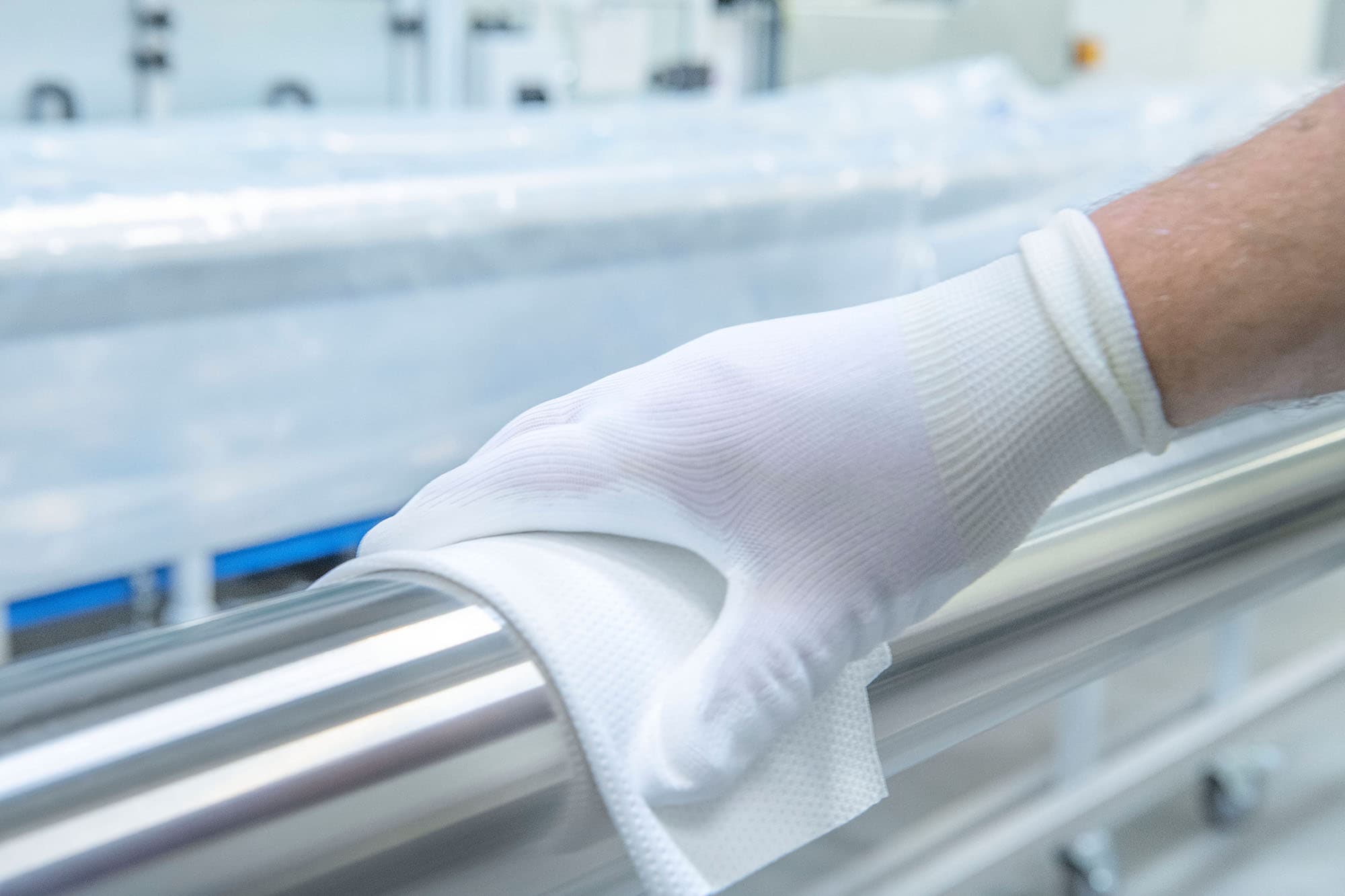
Even before further processing, materials undergo extensive testing.

These include, for example:

  • Material analyses
  • Material evaluations
  • Welding tests
  • Qualification for high-purity surfaces
  • Suitability tests for demanding applications

Especially for high-purity surface grades such as ultron, material quality forms the basis for reproducible results and the highest product quality. 

Lab

Material Grades for Different Requirements

Not every application has the same requirements for purity, corrosion resistance, and process reliability. That is why Dockweiler relies on a variety of material grades and manufacturing processes, tailored to each specific application:

  • Standard materials for industrial applications
  • SUS 316LTP in accordance with JIS G3459 and SEMI F20 for qualified semiconductor applications
  • VAR materials with increased homogeneity and purity
  • VIM-VAR materials for the most demanding requirements regarding cleanliness, weldability, and process reliability
  • Highly corrosion-resistant specialty materials such as 904L, AL-6XN or Hastelloy C22 for particularly aggressive media environments
More than just 316L.

Standard materials that meet the highest standards.

Even with standard materials, Dockweiler consistently scrutinizes quality, origin, and suitability.

Alloying elements such as chromium, nickel, molybdenum, manganese, titanium, or carbon significantly influence corrosion behavior, strength, weldability, and surface quality. Even within the same material grade, this can result in significant differences in performance. 

In addition, we evaluate the manufacturing processes and qualities of our raw materials. Depending on the application, different material grades and melting routes are used, such as qualified semiconductor materials like SUS 316LTP in accordance with JIS G 3459 and SEMI F20, as well as high-quality VAR or VIM-VAR materials for particularly demanding purity requirements. Vacuum melting and remelting processes enable exceptionally high homogeneity, low inclusion levels, and excellent processability.

That is why at Dockweiler we consider each melt individually and not solely based on the material designation. For us, quality does not begin with the finished tube, but rather with the selection of the right raw material.

When standard materials reach their limits.

Benefits:

Higher Process Reliability

Carefully selected and qualified materials ensure stable processes and reduce the risk of material-related failures.

Better Welding Results

Homogeneous materials and defined melt qualities support reproducible welding processes and consistently high joint quality.

Maximum Purity

Controlled materials form the basis for high-purity surfaces and minimize the risk of contamination.

Reproducible Quality

Qualified melts create the conditions for consistent product properties across many batches.

Fewer Risks of Failure

High material quality reduces unplanned downtime and supports long-term plant availability.

Optimal Surfaces

Selected materials enable the high surface qualities required for demanding high-purity applications.

Selected Alloys Gallery
Selcted Alloys